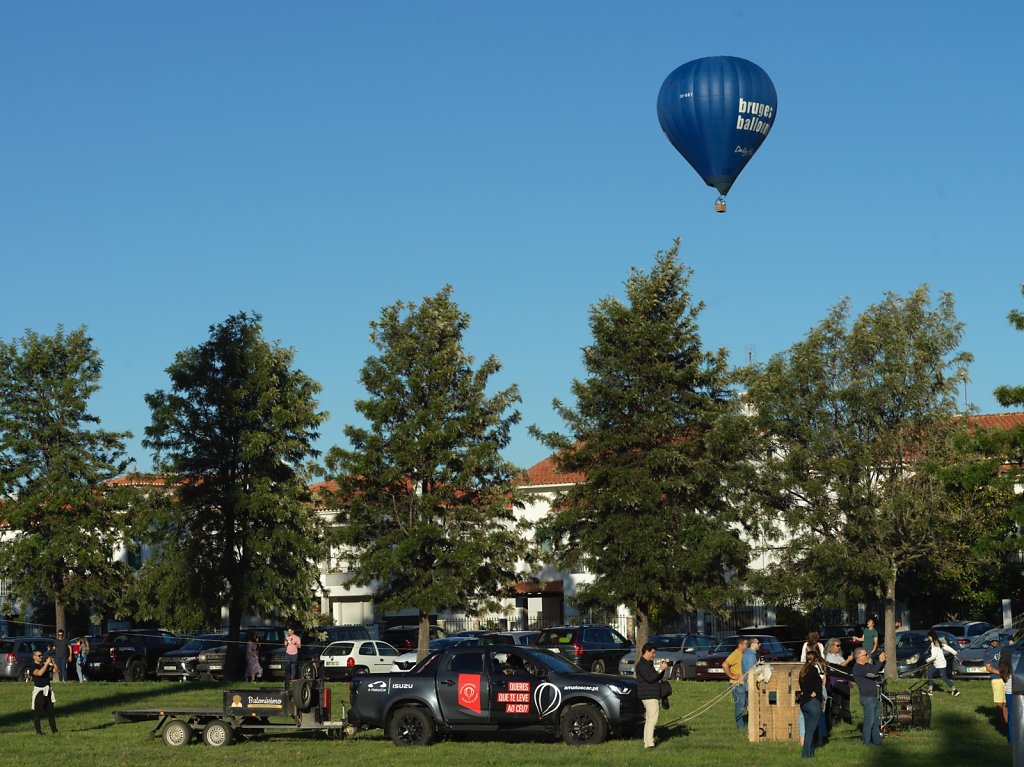
A balloon doesn't fly — it drifts with the air. That's why there's no wind in the basket: only silence, and the ground slowly falling away.
Thirty balloons
over the cork oaks
Every November the Alentejo turns into an airfield without a runway — and a meeting place for people who came to look up.
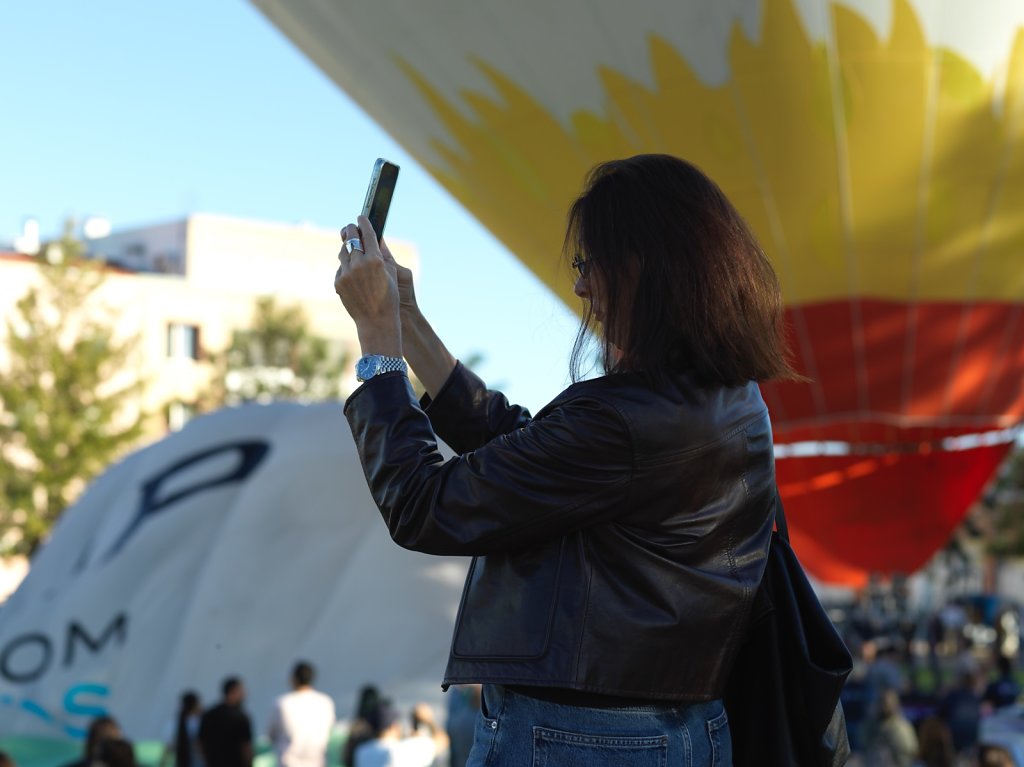
Morning on the field begins with the roar of burners. The envelopes lie on the grass like discarded dresses; fans blow cold air into them, then the flame bursts, and the balloon rises slowly, almost reluctantly, to its feet. Ten minutes later a six-storey house is hanging overhead, with a wicker basket beneath it and a few people waving down.
This is the Festival Internacional de Balões de Ar Quente — FIBAQ, the international hot-air balloon festival. It takes place every autumn in the district of Portalegre, across several small towns at once: Alter do Chão, Fronteira, Monforte and Ponte de Sor. Around thirty teams arrive from across Europe, and the festival has been running for more than twenty-five years. It's organised by the company Publibalão together with the club Alentejo sem Fronteiras, which since 2012 has run Portugal's only balloon pilot school, in Fronteira.
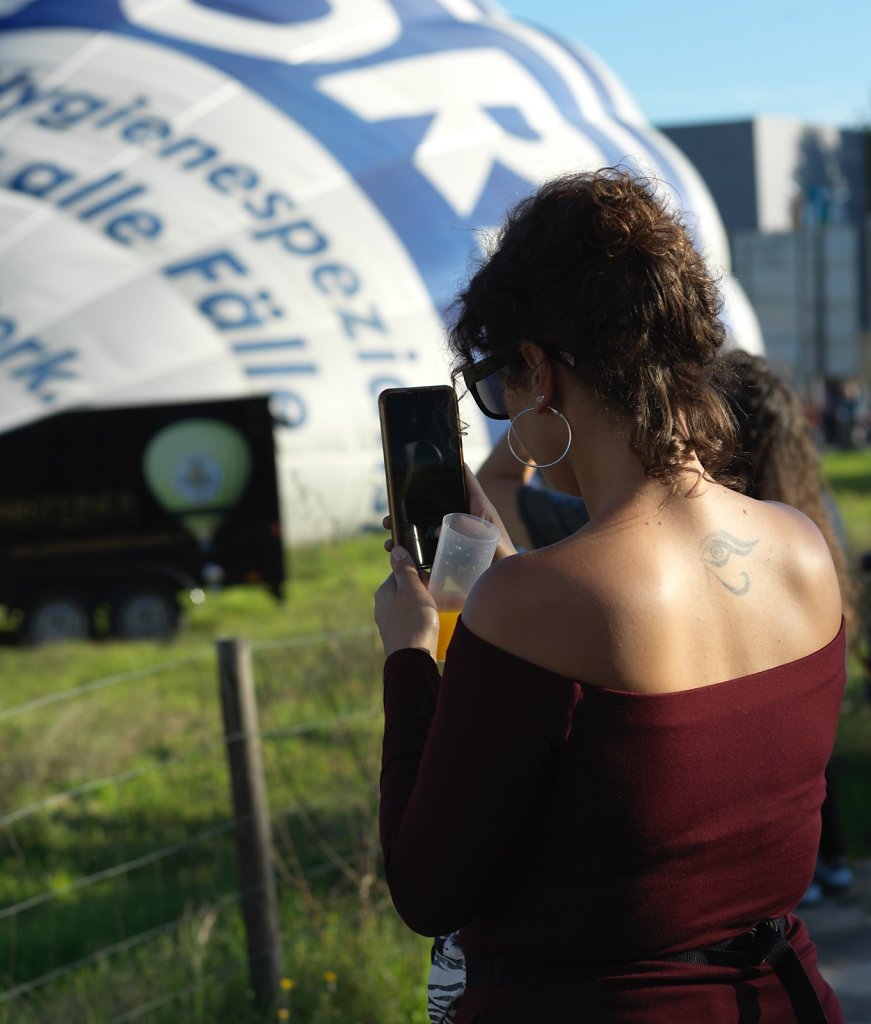
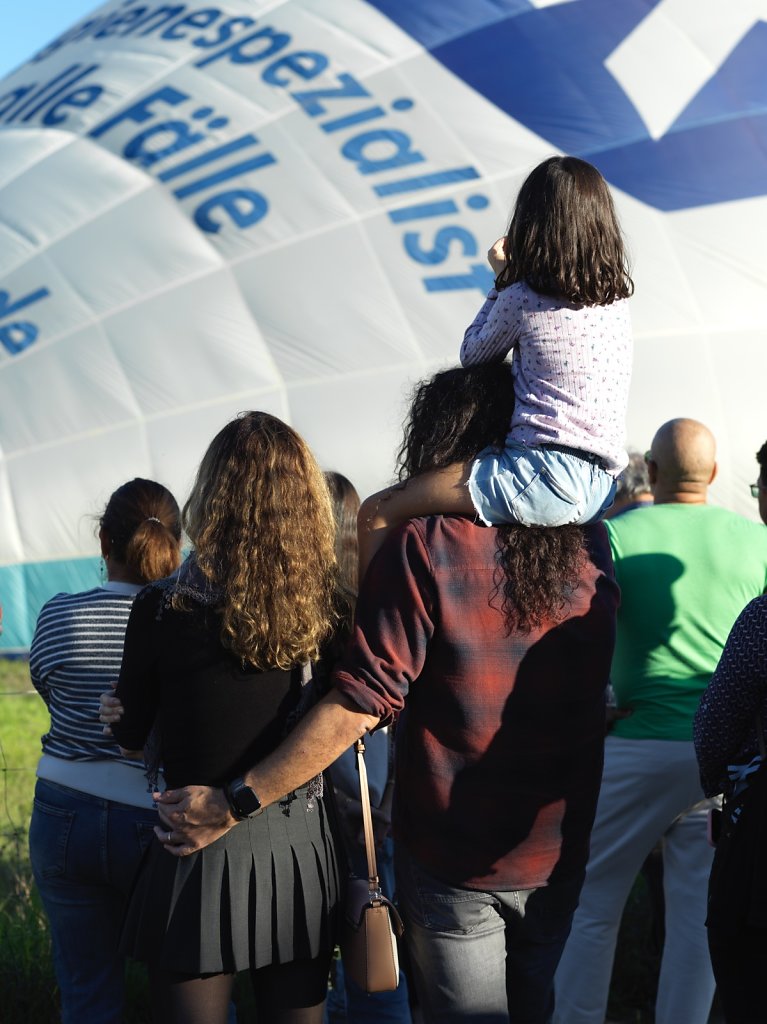
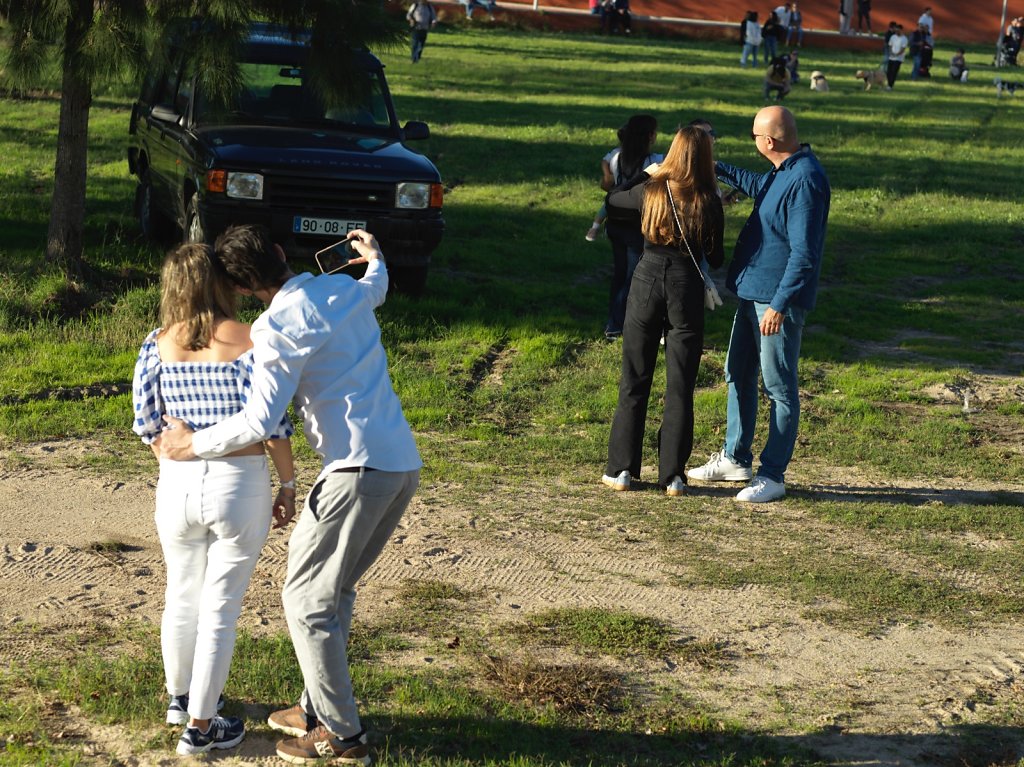
But the crowd doesn't come for the advertising. A balloon is the slowest and most romantic way to leave the ground, and the festival has long been a pilgrimage for couples: some photograph each other against the envelopes, some lift a child onto their shoulders, some simply stand with their heads tipped back. In the evening Ponte de Sor hosts the Night Glow — tethered balloons light up from inside in the dark, like enormous lanterns. Entry is free.
The Portuguese balloon
Europe forgot
The first people to send hot air aloft in an envelope are usually said to be the Montgolfier brothers — 1783, France. The Portuguese politely disagree. On 8 August 1709, 74 years before the Montgolfiers, in a hall of the Casa da Índia in Lisbon, a young priest named Bartolomeu de Gusmão showed King João V a small paper balloon with a flame beneath it. It rose about four metres.
Gusmão was twenty-four, born in Brazil, and he dreamed of something bigger — a bird-shaped flying machine he called the Passarola, "the big bird". The story goes that the balloon climbed so eagerly that servants rushed to knock it down, fearing for the curtains, while the king merely laughed. The Passarola never flew, and Gusmão went down in history as O Padre Voador — "the flying priest". Streets in Portugal and Brazil bear his name, and the Portuguese still regard him as the father of aerostation.
A bridge that's gone,
and a bridge that glows
A Roman road, a royal bridge from 1822, and a white tube over the river that changes colour as you walk through it.
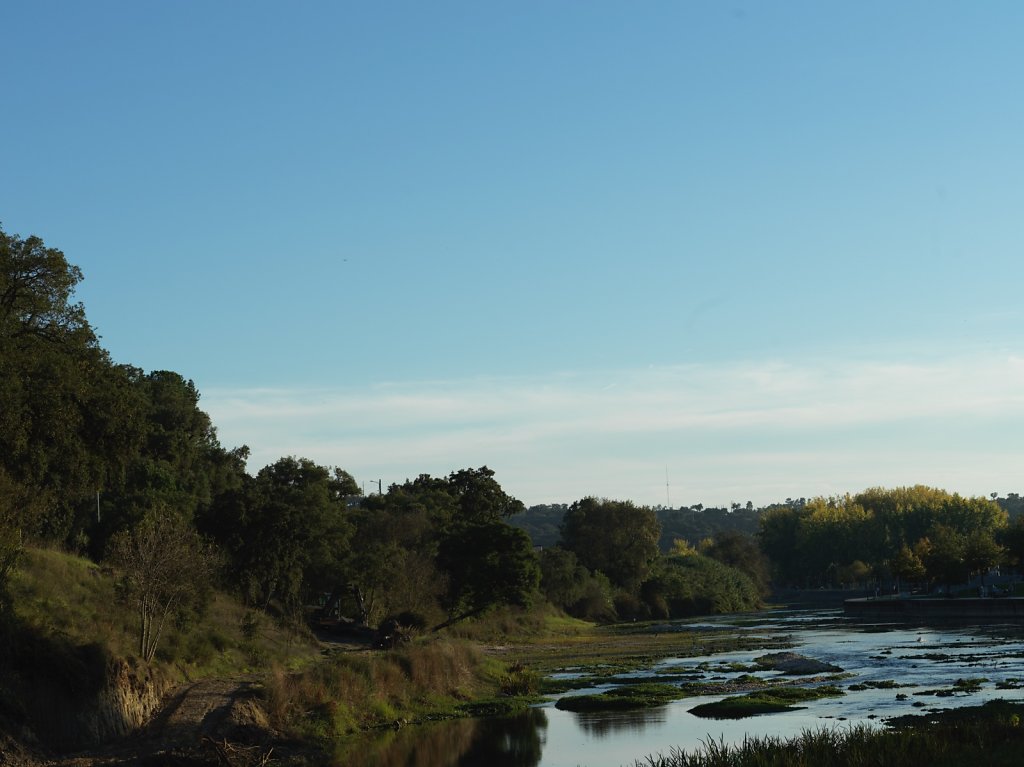
The town's name means, quite literally, "the bridge over the Sor". The Roman road from Olisipo — today's Lisbon — to Emerita Augusta, today's Mérida in Spain, passed through here, and a Roman bridge crossed the river Sor. Nothing of it survives. The present bridge was built on the orders of King João VI in 1822, and Ponte de Sor was only granted city status on 8 July 1985.
Wealth came here not from the bridge but from a tree. In the second half of the nineteenth century the railway reached the town, and Ponte de Sor became the largest cork entrepôt in the Alentejo. Cork factories still operate here today — the town remains one of the world's addresses for the cork industry.
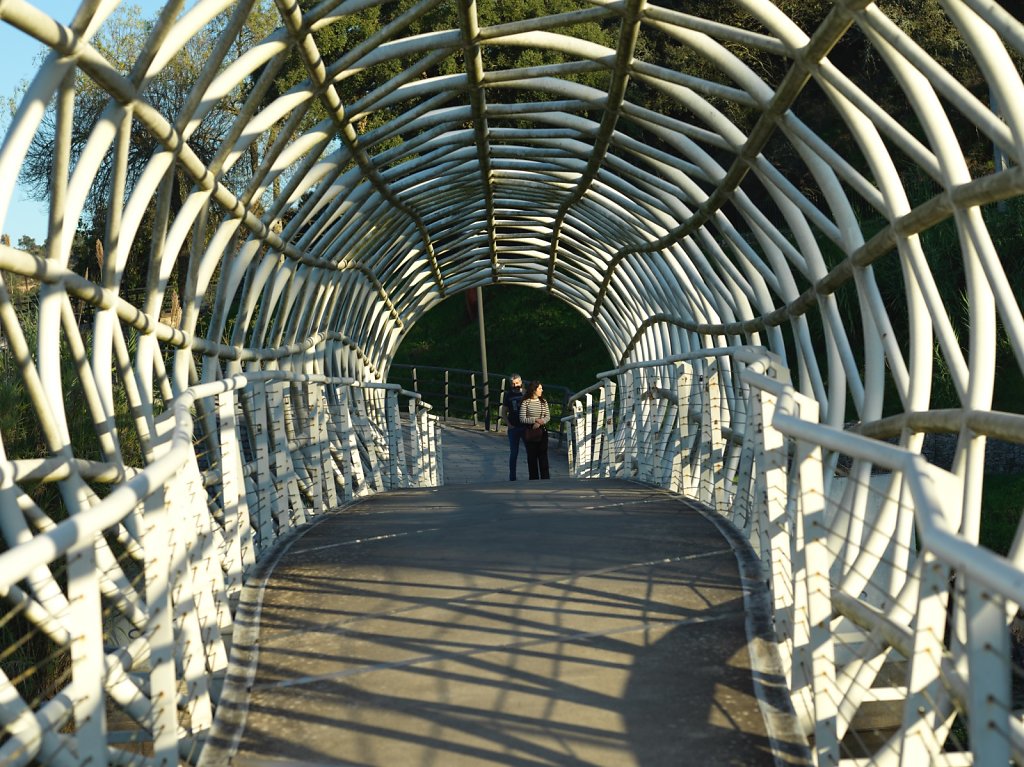
The most unexpected thing in town is a footbridge over the river in the riverside zone. A white tubular structure with no supporting pier in the middle: it's a sculpture bridge by the Portuguese artist Leonel Moura, who has spent years working with robots and artificial intelligence. The lighting inside changes colour as people walk across — so in the evening, every passer-by briefly becomes a co-author.
Sheep, oaks
and the sky's first passengers
A cork oak grows for a quarter of a century before giving up its first bark — and beneath it graze relatives of the most famous aeronauts in history.
Around Ponte de Sor lies the montado: a sparse woodland of cork and holm oaks with sheep grazing beneath them. It isn't wilderness but a landscape that people and animals have shaped over centuries: the sheep keep the grass short, the oaks give shade, bark and acorns. Portugal produces around half of the world's cork, and most of it grows here, in the Alentejo.
A cork oak can't be hurried. The first bark is stripped when the tree is about twenty-five years old, and after that once every nine years, for a century and a half. The last digit of the harvest year is painted on the trunk in white — so the next stripper knows when to come back.
A little further from town there's water: on a windless day the Montargil reservoir, in the same municipality of Ponte de Sor, turns into a mirror, and the pines on the shore stand upside down. That kind of morning — calm, no wind — is exactly what balloon pilots wait for: in strong wind, flights are cancelled.
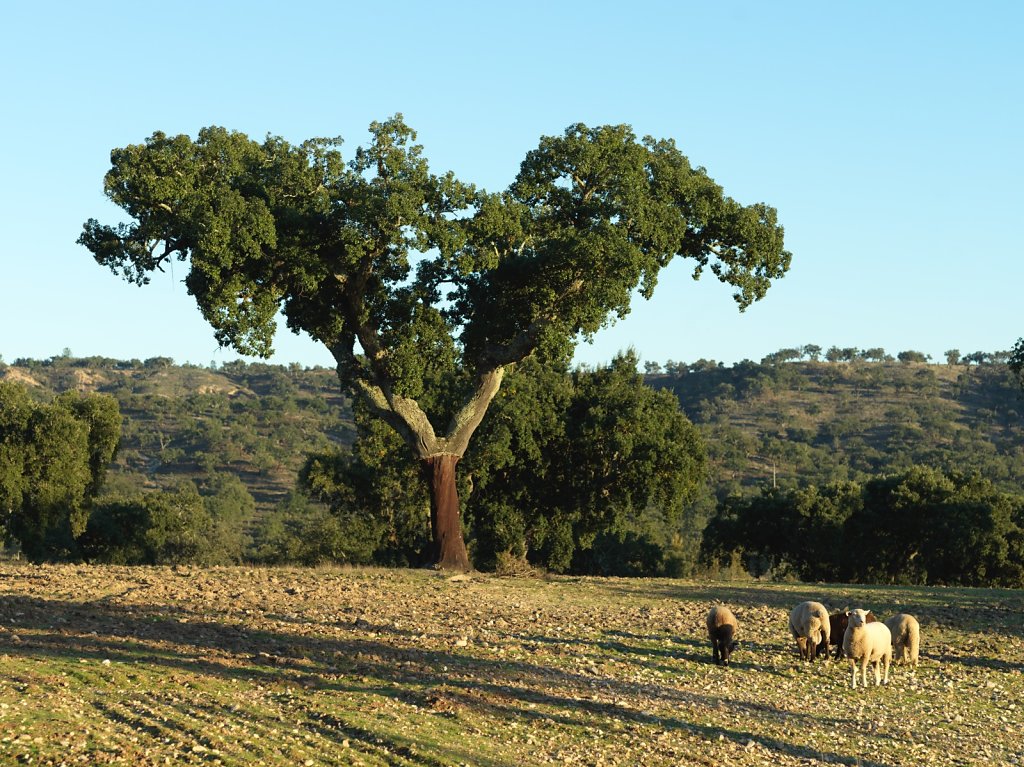
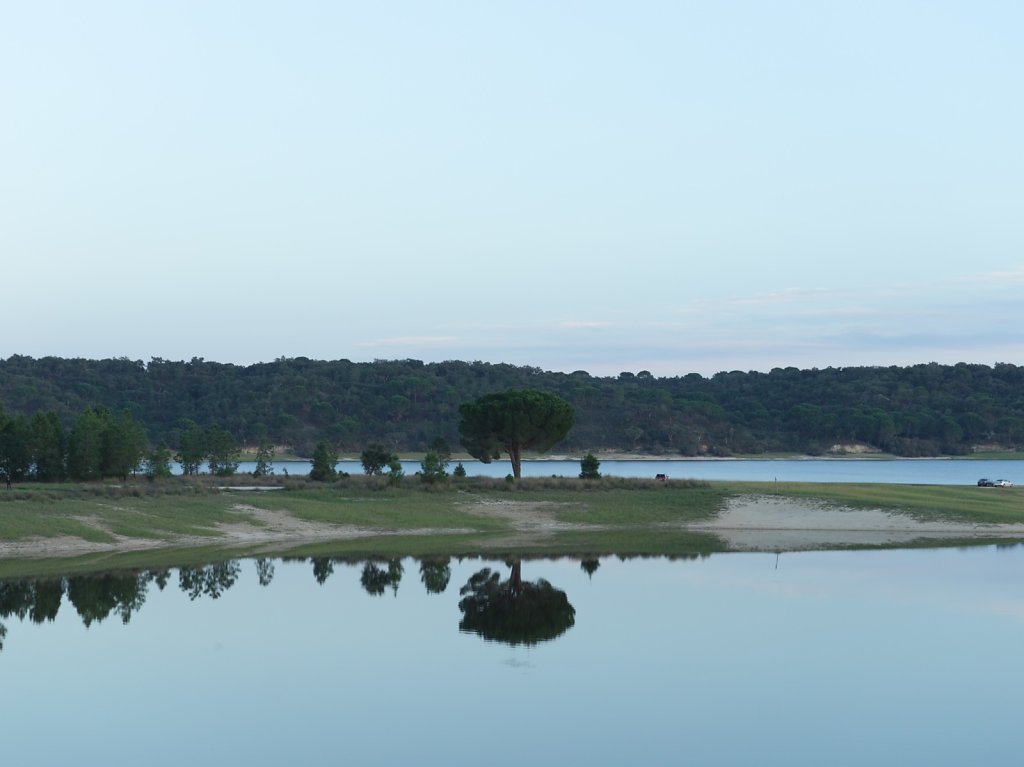
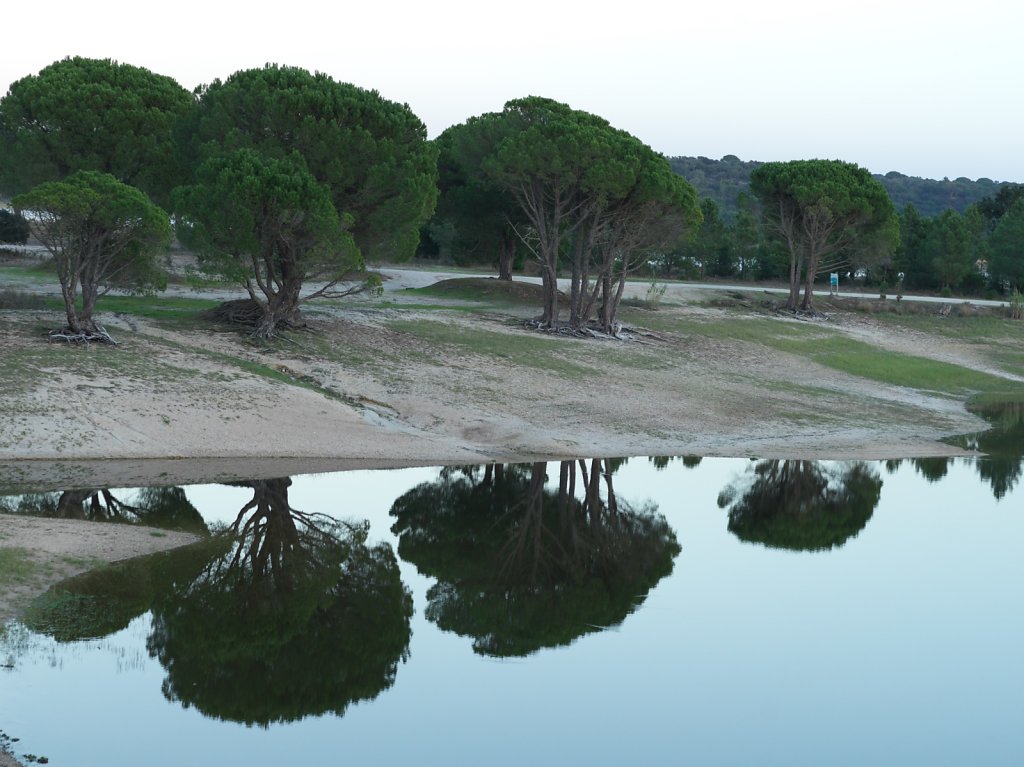
Balloons fly over the Alentejo, sheep graze beneath the balloons, and cork grows beneath the sheep. Nothing here hurries — and everything arrives on time.Secrets Service · Ponte de Sor
Bartolomeu de Gusmão showed King João V a flying balloon in Lisbon — 74 years before the Montgolfier brothers.
FIBAQ takes place every autumn in Alter do Chão, Fronteira, Monforte and Ponte de Sor; the evening Night Glow is free.
Portugal produces around half of all the world’s cork. Bark is stripped from an oak once every nine years.
The bridge over the Sor was built on João VI’s orders where the Roman one once stood; Ponte de Sor became a city in 1985.
A sunflower
at the Repsol station
On the road from Lisbon, on the N119 national road near Coruche, there's a place worth pulling over for.
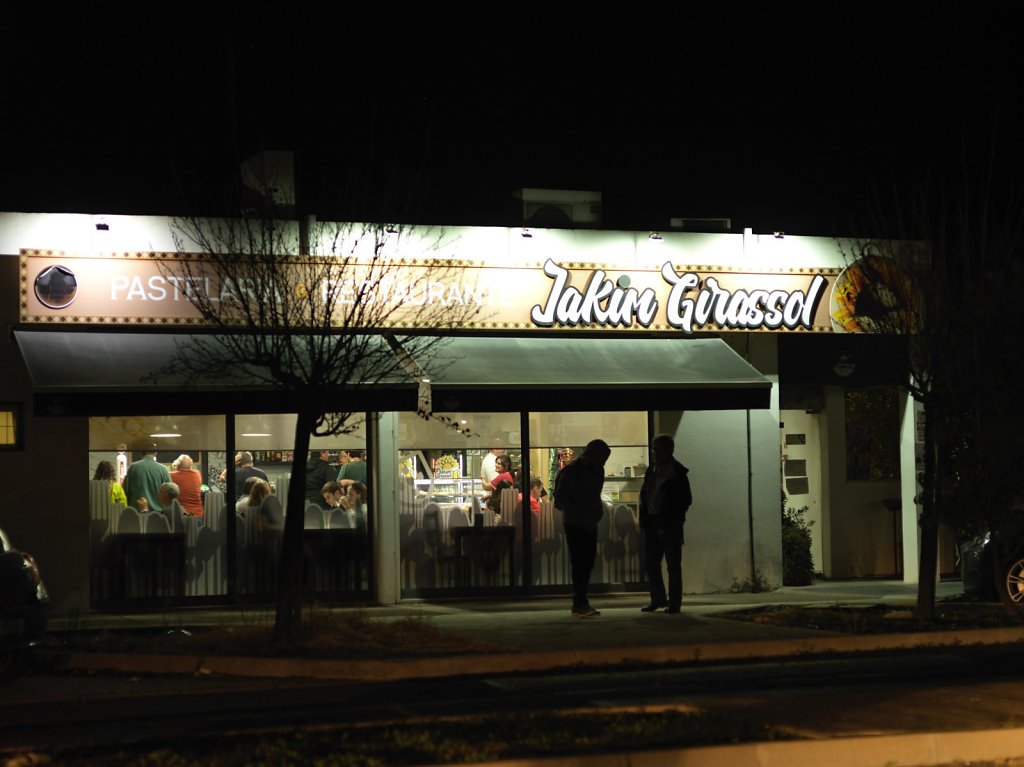
From Lisbon to Ponte de Sor is about two hours. First the bridge over the Tagus, then the plains of the Ribatejo, rice fields and cork oaks along the verge. Somewhere around halfway, by the village of Biscainho near Coruche, a Repsol station stands on the N119 — and inside it, the pastelaria and restaurant Jakim Girassol. Girassol is Portuguese for "sunflower".
From outside, nothing special: a petrol station, a car park, a sign glowing in the dark. Inside is the kind of Portuguese roadside life you won't find in guidebooks. Simple, homemade Portuguese food at modest prices, a counter of pastries, coffee drunk standing at the bar in half a minute. Open from seven in the morning to eleven at night, closed on Mondays.
But it isn't the menu that stays with you. It's the welcome. At the neighbouring tables you hear Portuguese, English, German, Spanish — locals and travellers from all over Europe stop here alike. Everyone is greeted, everyone gets a smile, everyone gets an attempt at conversation — in Portuguese, in English, in gestures. Ten minutes in, it feels less like a stopover and more like dropping in on friends.
We ordered king prawns. A young man in a red jumper was standing at the bar — British, I think — and out of nowhere he bought us a beer each. Just like that, for strangers at the next table. It was unexpected and lovely, and it explains this place better than any description could.
The man in the red jumper made it into the frame — you can see him at the bar in the photograph below. Later I printed that picture, drove it back to Jakim Girassol and gave it to the staff. If you pass by, ask about it.
How to catch the balloon festival
FIBAQ takes place in November; the organisers announce exact dates in advance each year — check the festival's website and the municipal pages of Ponte de Sor, Fronteira, Monforte and Alter do Chão. Flights usually happen in the morning, right after sunrise, so arrive the day before. The Night Glow in Ponte de Sor is free. Everything depends on the weather: in wind or rain flights are cancelled, so keep a spare day.
From Lisbon, driving is easiest — about two hours. Stop at Jakim Girassol on the N119 near Coruche (Repsol station, Biscainho; open 7am–11pm, closed Mondays). In Ponte de Sor itself, walk along the river to Leonel Moura's bridge, ideally at dusk when the lighting comes on.

