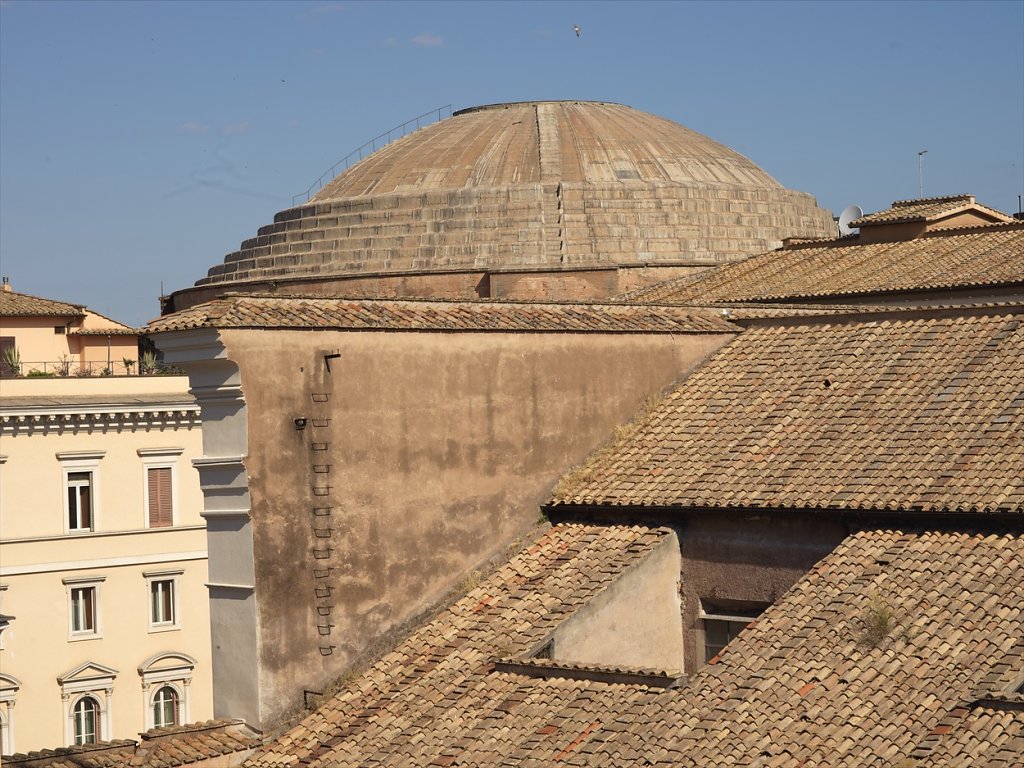
Barcelona builds facades out of the sea and the forest — then rents the ground floor to a boutique.
Three architects,
one block
The Illa de la Discòrdia: three buildings, three manifestos of Modernisme — and a rivalry that was almost literal.
Between Carrer d'Aragó and Carrer del Consell de Cent, on Passeig de Gràcia, three houses stand a few dozen metres apart. They were built almost simultaneously, around the turn of the 1900s, by the three leading architects of Catalan Modernisme — and each one seems to have been trying to outdo the neighbours.
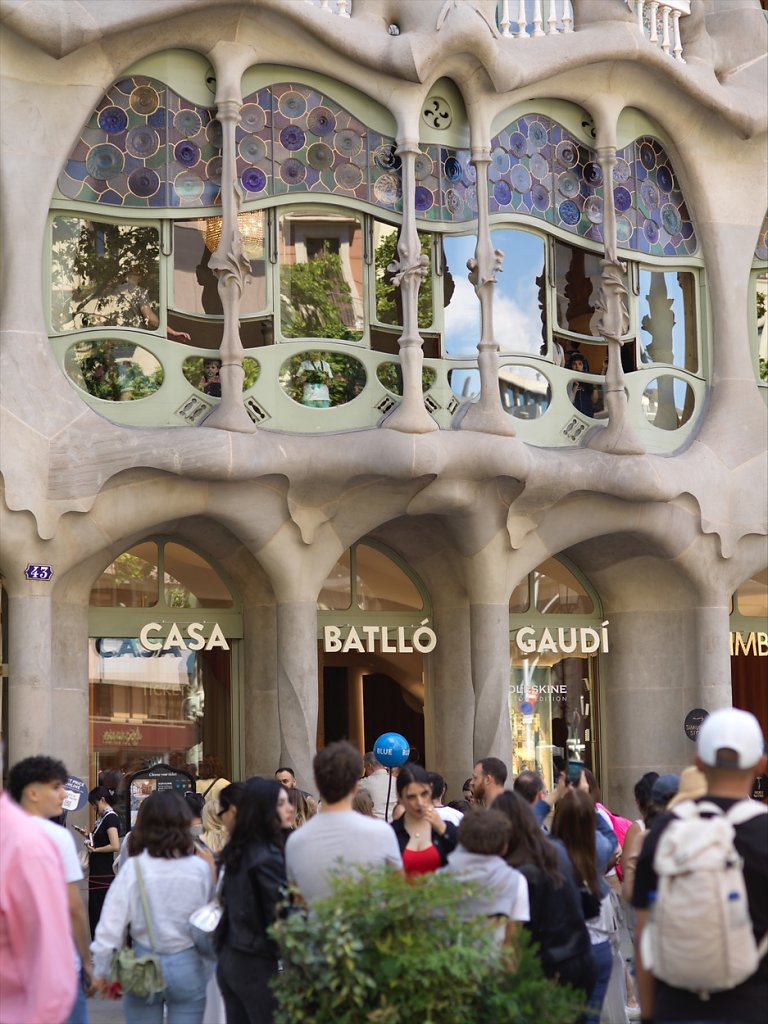
Casa Lleó-Morera is the work of Lluís Domènech i Montaner, finished in 1905. Casa Amatller belongs to Josep Puig i Cadafalch, rebuilt by 1900 in a Flemish Gothic style, with a stepped gable and ceramic tiles. And the third house in the row is Casa Batlló, Antoni Gaudí's creation, completed in 1906: undulating balconies, bone-like railings, a scaled roof popularly read as a dragon's back.
Today it's Gaudí's facade that gets photographed most — partly because it's the strangest, partly because his name is usually written somewhere nearby in large letters.
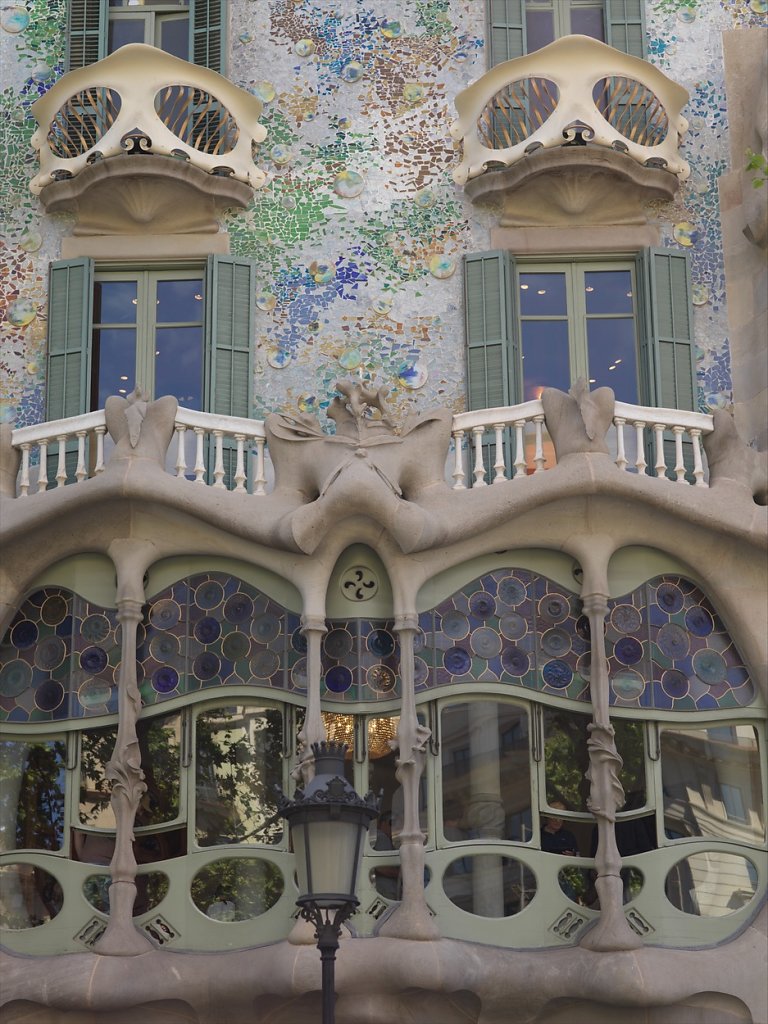
The mosaic is just the backdrop.
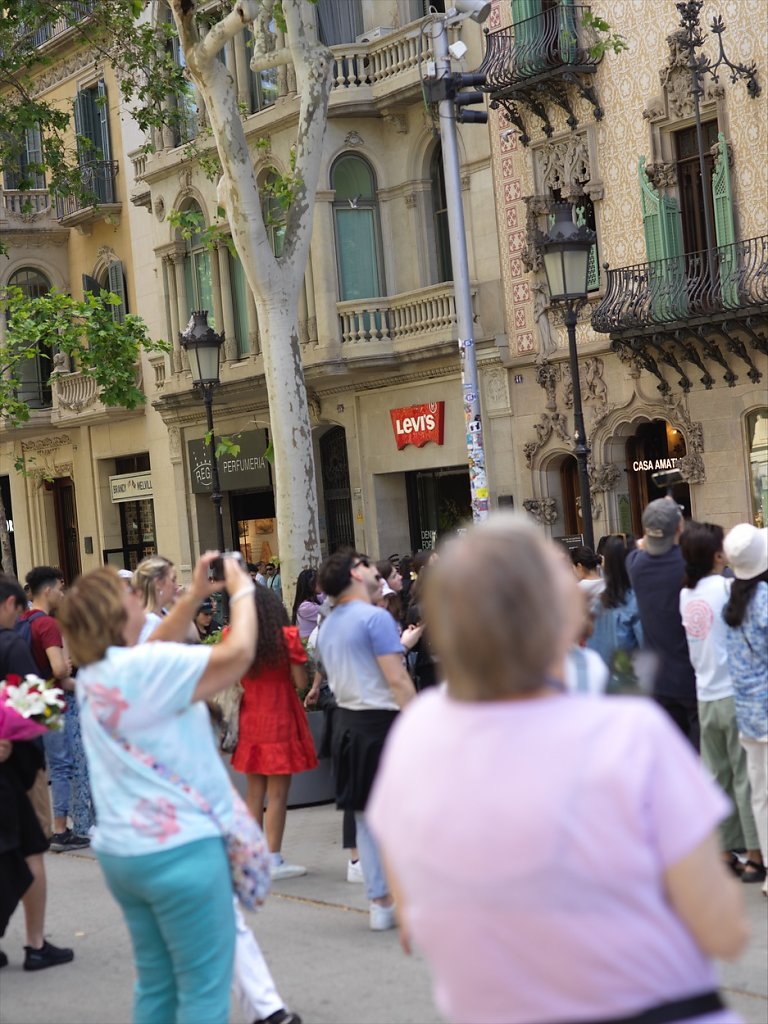
The real fight is over the ground floor
The benches everyone assumes are Gaudí's were designed by another architect entirely — and the street itself has become Spain's most expensive.
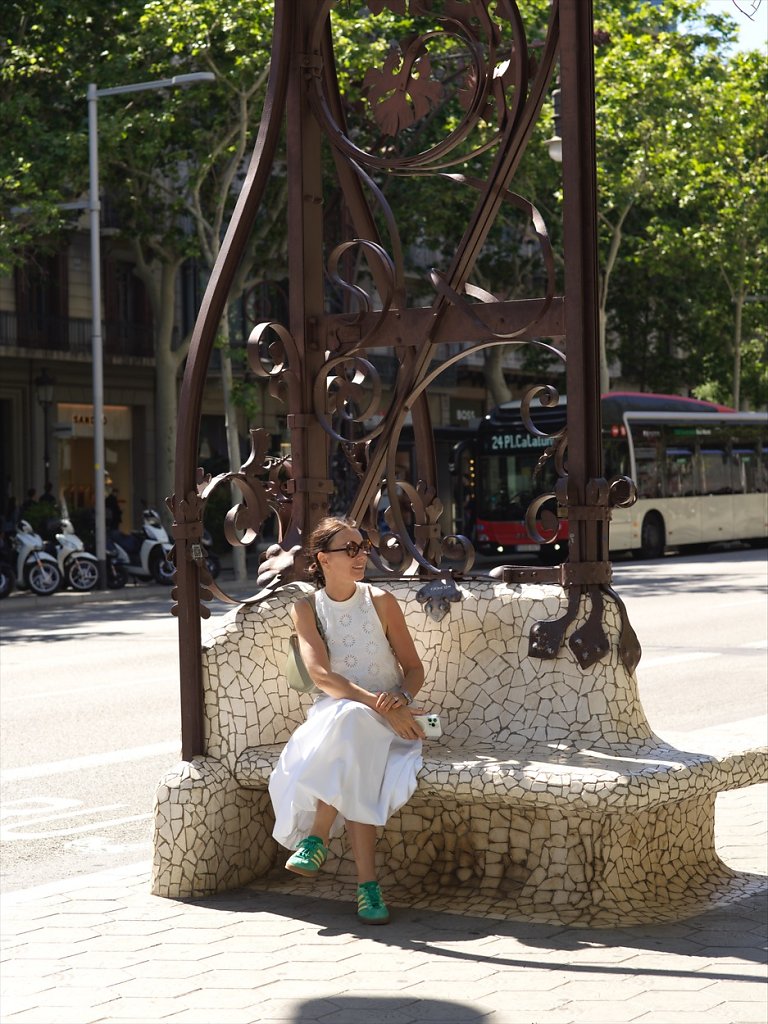
Thirty-two lamppost-benches line Passeig de Gràcia: cast-iron lamps rising from a wavy mosaic base made with trencadís, the technique of broken ceramic tile. Almost every visitor assumes they're Gaudí's work — the technique is his signature, and the style is instantly recognisable.
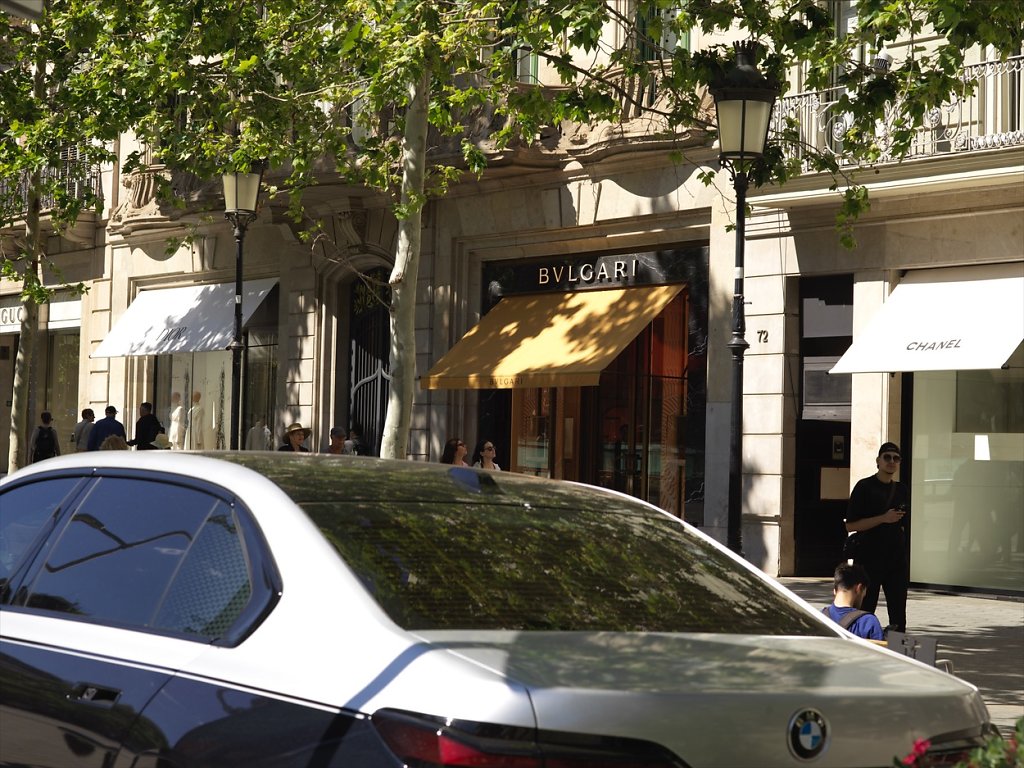
The street itself is caught up in a different rivalry — over shop windows. For the fourth year running, Passeig de Gràcia remains Spain's most expensive shopping street: rents here exceed three thousand euros per square metre a year, and according to the latest report from the international consultancy Cushman & Wakefield, that puts it 16th in the world. Bvlgari, Chanel, Tiffany, Louis Vuitton — all standing a few steps from houses that, little more than a century ago, were built as private mansions for textile manufacturers.
Gaudí built houses by looking at skeletons and sea waves. Fashion built its houses by looking at Gaudí's shop window.Secrets Service · Barcelona
A ring from a box
of candied popcorn
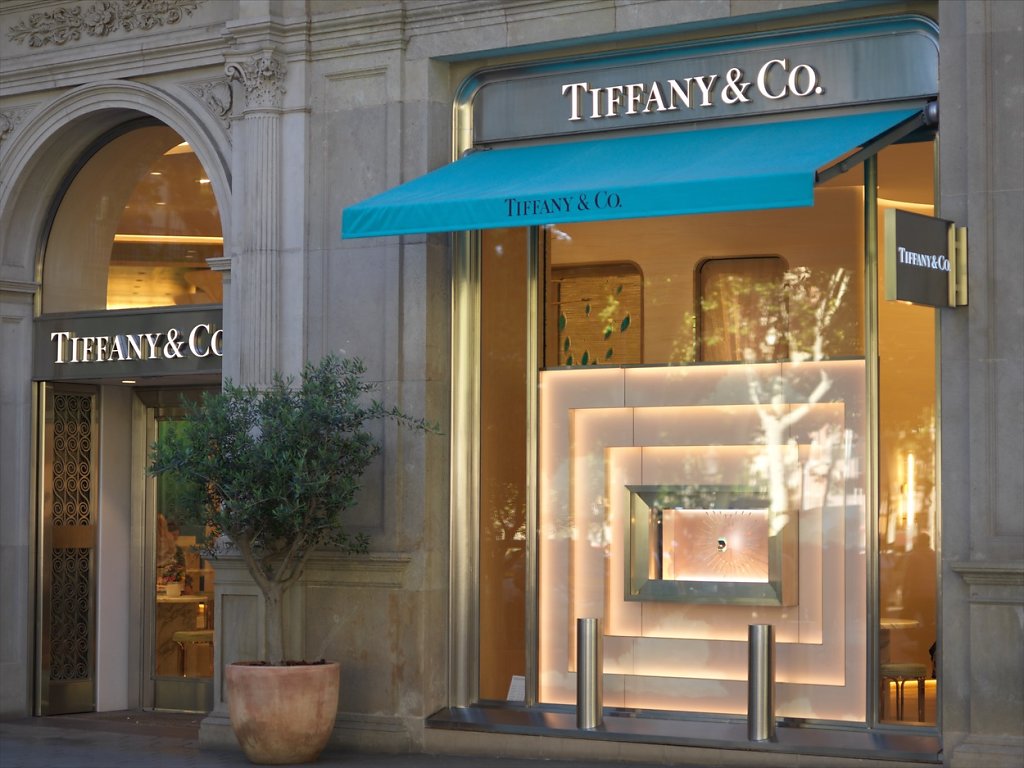
The shopfront on Passeig de Gràcia is a descendant of the one in New York where, at dawn, a young woman stood window-shopping with coffee and a croissant in hand — the opening of Breakfast at Tiffany's. The 1961 film was based on Truman Capote's novella of the same name, and that Fifth Avenue window has been one of the most photographed in the world ever since.
The film's funniest scene doesn't happen at the window, though, but inside the store. Holly and Paul walk into Tiffany's with ten dollars and a ring they've fished out of a box of Cracker Jack — caramel-coated popcorn that came with a small toy prize — and ask to have it engraved. The salesman first admits, quite honestly, that ten dollars won't buy much at Tiffany's, then, charmed by their nerve, agrees to engrave the toy ring anyway and hands it back in the store's signature blue box. The crew reportedly went through around two hundred boxes of Cracker Jack before they found a ring worth using on camera.
The house's signature stone, that same yellow Tiffany Diamond, was worn by Audrey Hepburn for publicity photographs around the film's 1961 release. Before her, it had been worn only twice in the company's entire history — and it wasn't taken out of the vault again until 2019, for Lady Gaga at the Oscars.
The house
they called a quarry
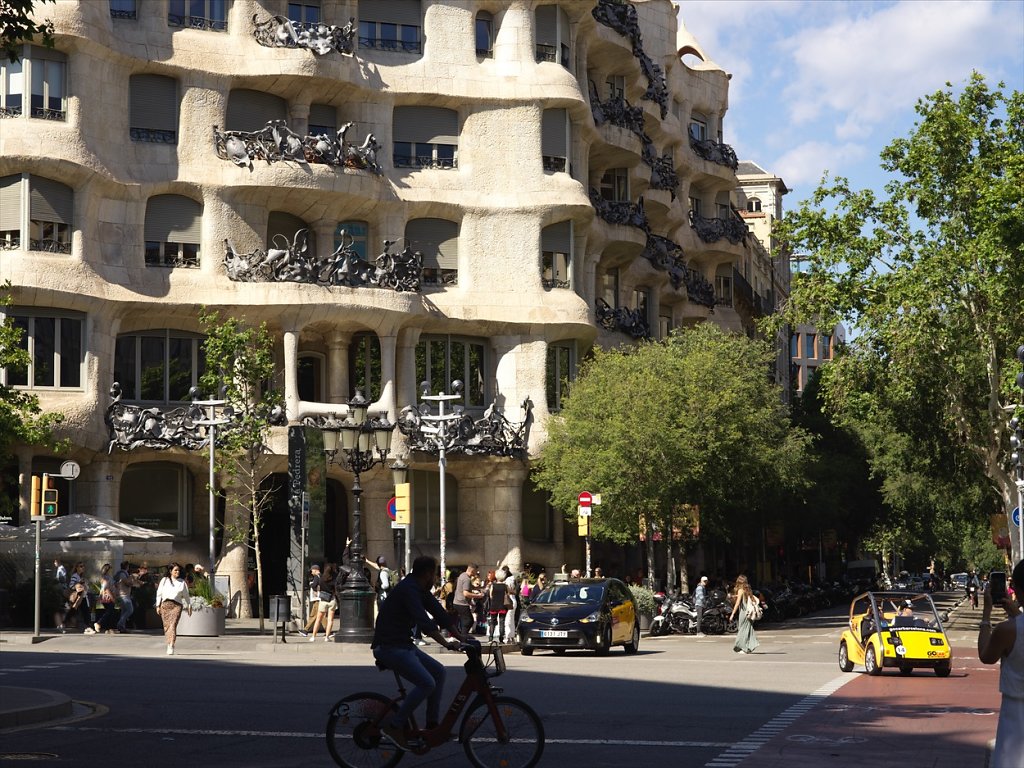
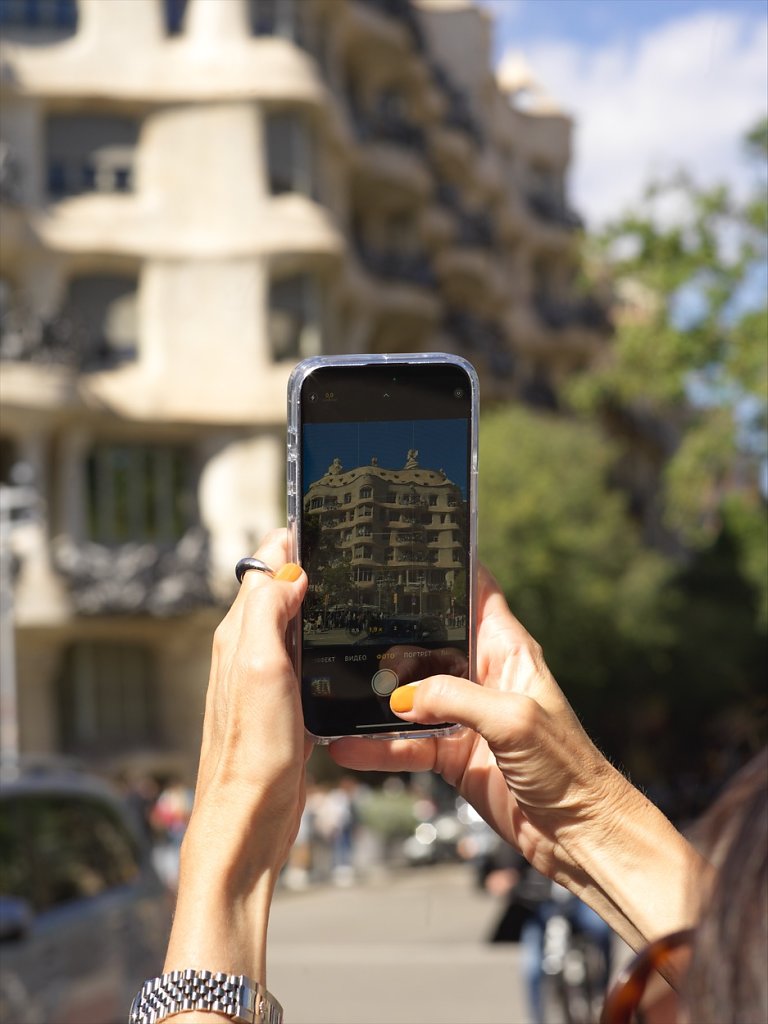
Wavy stone without a single straight angle — and a man with a phone, photographing it exactly as people once photographed it with disapproval.
Casa Milà was Gaudí's last civil commission, the building after which he devoted the rest of his life to a single cathedral. It was built in 1906–1912 for Pere Milà and Roser Segimon: a wavy limestone facade without a single straight angle, wrought-iron balconies, not one load-bearing wall inside.
Contemporaries didn't care for it. They nicknamed it La Pedrera — "the quarry" — a jab that stuck so firmly it became the building's unofficial second name, now used affectionately.
A century ago, passers-by stopped in front of this facade to grumble. Now they stop to photograph it. The instrument changed; the reaction didn't.
The Illa de la Discòrdia: three architects, three manifestos of Modernisme, built almost simultaneously on the same street.
Casa Milà, together with Park Güell and Palau Güell, was inscribed as World Heritage among the first twentieth-century buildings to receive the status.
Passeig de Gràcia is Spain’s most expensive shopping street and one of the most expensive in the world, according to Cushman & Wakefield.
A hundred years
without Gaudí
On 7 June 1926, Gaudí was walking back from his daily confession when he was hit by a tram on the Gran Via. Dressed poorly and carrying no identification, he looked so unlike a famous architect that bystanders took him for a beggar and were slow to call for help. He died three days later, on 10 June, at the age of 73 — and was buried in the crypt of his own unfinished cathedral.
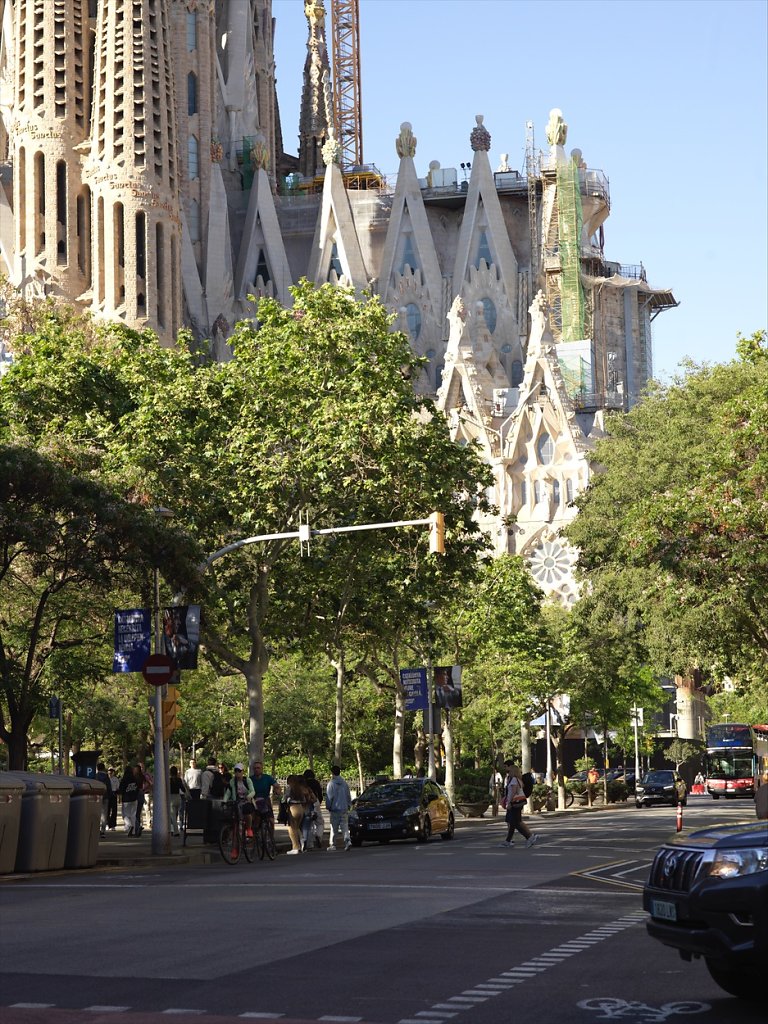
The Sagrada Família kept rising for a hundred years after his death, built from other hands' drawings and the plaster models he left behind — some of them smashed during the Spanish Civil War and later pieced back together from photographs. In February 2026 the central Tower of Jesus Christ was finally completed — 172.5 metres tall, making the basilica the tallest church in the world, surpassing Germany's Ulm Minster. On 10 June 2026, exactly a hundred years after Gaudí's death, Pope Leo XIV blessed the finished tower during his visit to Spain.
The block on Passeig de Gràcia is still arguing over shop windows. The cathedral, at last, is finished.
What to know before you go
Book tickets for Casa Batlló, Casa Milà and the Sagrada Família online, well in advance — queues without a reservation can stretch for hours. See the Block of Discord early in the morning or near sunset: by midday the Passeig de Gràcia pavement fills with people photographing each other against the mosaic.
Pere Falqués's lamppost-benches line the whole street between Plaça Catalunya and the Diagonal — sit on at least one before moving on. And don't haggle with the shop assistants: this is Spain's most expensive street for a reason.