Rome does not require an introduction. It requires time. More time than you think, and more than you have.
The city that
begins with noise
Scooters, voices, coffee machines — and two thousand years of history living alongside today without apology.
Rome begins with noise. Not tourist noise — real, urban noise. Scooters, voices, a fountain somewhere, a coffee machine somewhere else. And among it all, a Ferrari parked against an ancient wall as if that were perfectly normal. Because in Rome it is. Two thousand years of history live alongside the present here without apology.
This may be the only city where you can have breakfast at a bar counter overlooking first-century ruins, walk past the Pantheon on the way to the supermarket and not notice — because you’ve got used to it. Though no one ever really gets used to Rome.


Architecture
people live in
Baroque beside the ancient, Renaissance beside twentieth-century rationalism. And in all of it people eat, argue and laugh.
Rome’s architecture is not an open-air museum. It is a living city that happens to be very old. Baroque stands beside the ancient, Renaissance beside twentieth-century rationalism. And it all works — literally: people live, work and eat in these buildings.
The Trevi Fountain is best seen early in the morning, when the crowds are still asleep and the water sounds in the silence of a narrow street. Toss a coin over your shoulder, make a wish — to come back to Rome. The custom is older than cinema, but it was the 1954 film Three Coins in the Fountain that made it famous worldwide. Rome knows how to turn legends into reality.
They say if you throw a coin into the Trevi Fountain, you will return to Rome. Judging by the coins on the bottom, the whole world wants to come back.Secrets Service · Rome


Built around 125 AD.
Still standing.
A round hall, a hole in the dome and rain that falls straight inside.
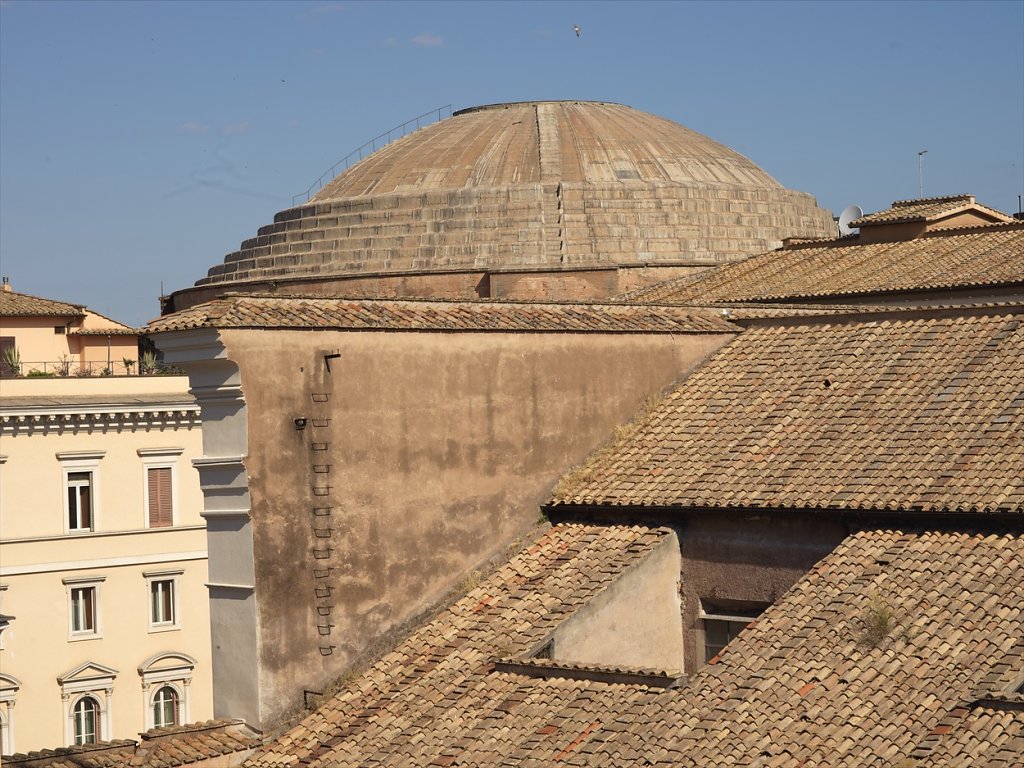
The Pantheon is the most astonishing building I have ever seen. It was built under the emperor Hadrian, around 125 AD, almost two thousand years ago — and it is still standing. A round hall, a dome with an opening at the top — the oculus. When it rains, the water falls straight inside and runs away through drainage holes in the floor made by the Romans themselves.
The Pantheon’s dome is still the largest unreinforced concrete dome in the world. The Romans made the concrete lighter the higher it went: heavy stone at the bottom, porous pumice at the top. You stand inside and understand: you are very small. In the best possible sense.


You could write
a whole magazine about the food
Carbonara without cream, pizza from a wood-fired oven and a market that has filled the square for a century and a half.
You could write a whole magazine about the food in Rome. Carbonara — only here, only like this, only with guanciale and never with cream. Pizza — thin, crisp, from a wood-fired oven. Gelato — slowly, in a cone, strolling along the Tiber. Espresso — standing at the bar, in one gulp.
In the morning Campo de’ Fiori sells cheese by the wheel, peppers by the string, flowers by the armful. Traders argue, customers taste, someone is already carrying home a Parmesan the size of a cartwheel. Rome feeds you — and won’t let you go.


Under the emperor Hadrian. In use without a break for almost two thousand years — first as a temple, as a church since the seventh century.
The largest unreinforced concrete dome in the world. The opening at the top is about nine metres across.
Open every day except Sunday, on the square where Giordano Bruno was burned in 1600.
What to know before you go
Rome is best seen on foot — the centre is compact. The Colosseum, the Forum, the Pantheon, Trastevere, the Vatican are all within walking distance of one another. The best time is early morning, when the streets are still empty. The Trevi Fountain at 7am is a completely different experience from midday. Since 2023 there has been an entry fee for the Pantheon.
Essential: the morning market on Campo de’ Fiori, carbonara in Trastevere, espresso standing at the bar, and an evening on the Aventine Hill with a view of St Peter’s dome through the Knights of Malta keyhole.

